Inside Marbella’s Luxury Villas: Architecture and Interior Design
The architecture of Marbella’s finest villas is not simply aesthetic expression; it is structural identity. Proportion, materiality, light, and spatial flow define how a property performs as both residence and hosting environment. At Marbella Private Villas, each estate is selected not only for location and scale, but for architectural integrity and operational capability. From contemporary hillside residences to heritage-inspired coastal estates, Marbella’s luxury villas demonstrate how design directly shapes experience.
ARCHITECTURE AS INFRASTRUCTURE
In high-capacity private estates, architecture must balance visual impact with functionality. Successful properties integrate:
• Clear circulation between guest and service areas
• Defined indoor and outdoor hosting zones
• Structural privacy between accommodation wings
• Seamless transitions from formal to informal spaces
• Proportional scale suited to group gatherings
This integration ensures that aesthetic value does not compromise operational flow.
COASTAL MODERNISM AND ORGANIC DESIGN
Marbella’s beachfront estates often reflect principles of organic architecture: low horizontal lines, deep overhangs, shaded courtyards, and integration with landscape. These elements reduce visual interruption while enhancing climate responsiveness.
Glass façades frame Mediterranean views while maintaining internal privacy. Open-plan layouts create continuity between sea-facing terraces and interior salons. Structural geometry aligns with natural light patterns, allowing architecture to respond to both orientation and season.
HILLSIDE CONTEMPORARY AND MEDITERRANEAN HERITAGE
In gated hillside communities, contemporary villas frequently prioritise elevation, transparency, and structural minimalism. Steel, glass, and stone combine to emphasise panoramic positioning and natural light.
By contrast, Andalusian-inspired estates incorporate courtyards, vaulted ceilings, arcades, and textured materials such as terracotta, carved wood, and natural stone. These properties draw from regional tradition while integrating modern comfort systems and technical infrastructure.
Both styles coexist within Marbella’s architectural landscape, offering planners flexibility in aesthetic direction without compromising privacy or capacity.
INTERIORS AS FUNCTIONAL ENVIRONMENTS
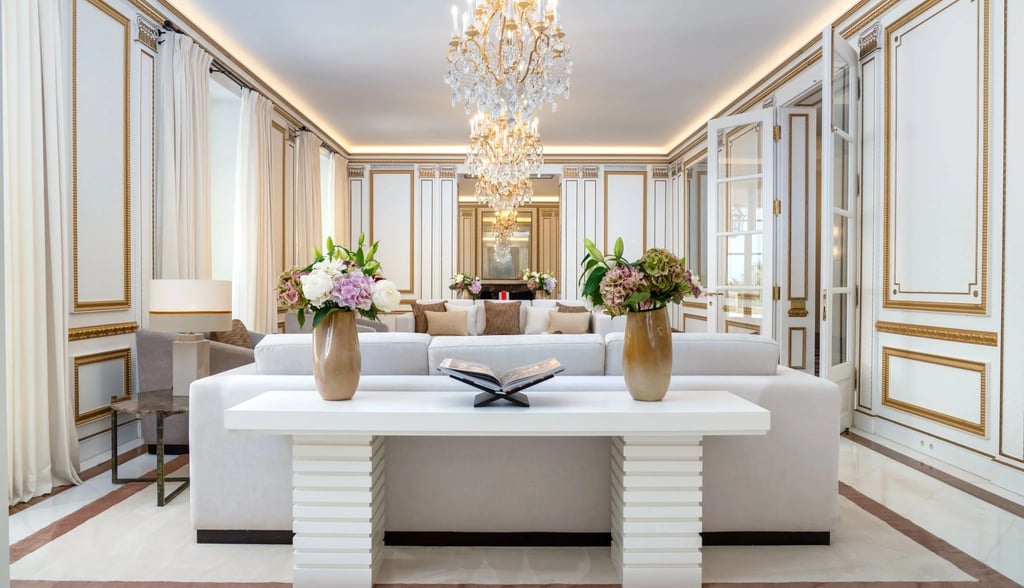
Interior design within luxury villas must serve both atmosphere and adaptability. Key elements include:
• Open-plan salons connected to terraces
• Acoustically balanced dining areas
• Zoned lighting systems for event transitions
• Custom furnishings scaled for group comfort
• Neutral palettes that support flexible styling
Lighting design plays a particularly strategic role. Morning orientation, clerestory windows, and reflective surfaces enhance daylight use, while layered evening lighting defines conversation zones and formal dining atmospheres.
These interiors are not staged environments; they are operational spaces designed for extended occupancy.
DESIGN IN SERVICE OF EXPERIENCE
A private estate must perform equally well for intimate family stays, executive retreats, or structured events. Architectural clarity allows service teams to operate discreetly while guests experience visual harmony and spatial calm. The result is a property that functions as both architectural statement and hosting platform.
Marbella Private Villas curates estates where design, proportion, and service infrastructure align. Each property is assessed not only for visual merit but for its capacity to support high-level stays.
To receive detailed estate dossiers and architectural specifications aligned with your programme requirements, contact us directly.
MARBELLA PRIVATE VILLAS
© Marbella Private Villas, S.L.U.




Curated luxury villa rentals and private event venues in Marbella, supporting travel advisors, planners and corporate clients with local coordination.
Marbella Private Villas is a member of leading high-end travel communities for professionals: